
The global luxury landscape has undergone a tectonic shift. While 2025 was marked by “aspirational fatigue,” 2026 has emerged as the year of the Ultra-Exclusive. For the first time in history, we are seeing a clear divide between “Mass-Luxury” and “True Scarcity.”
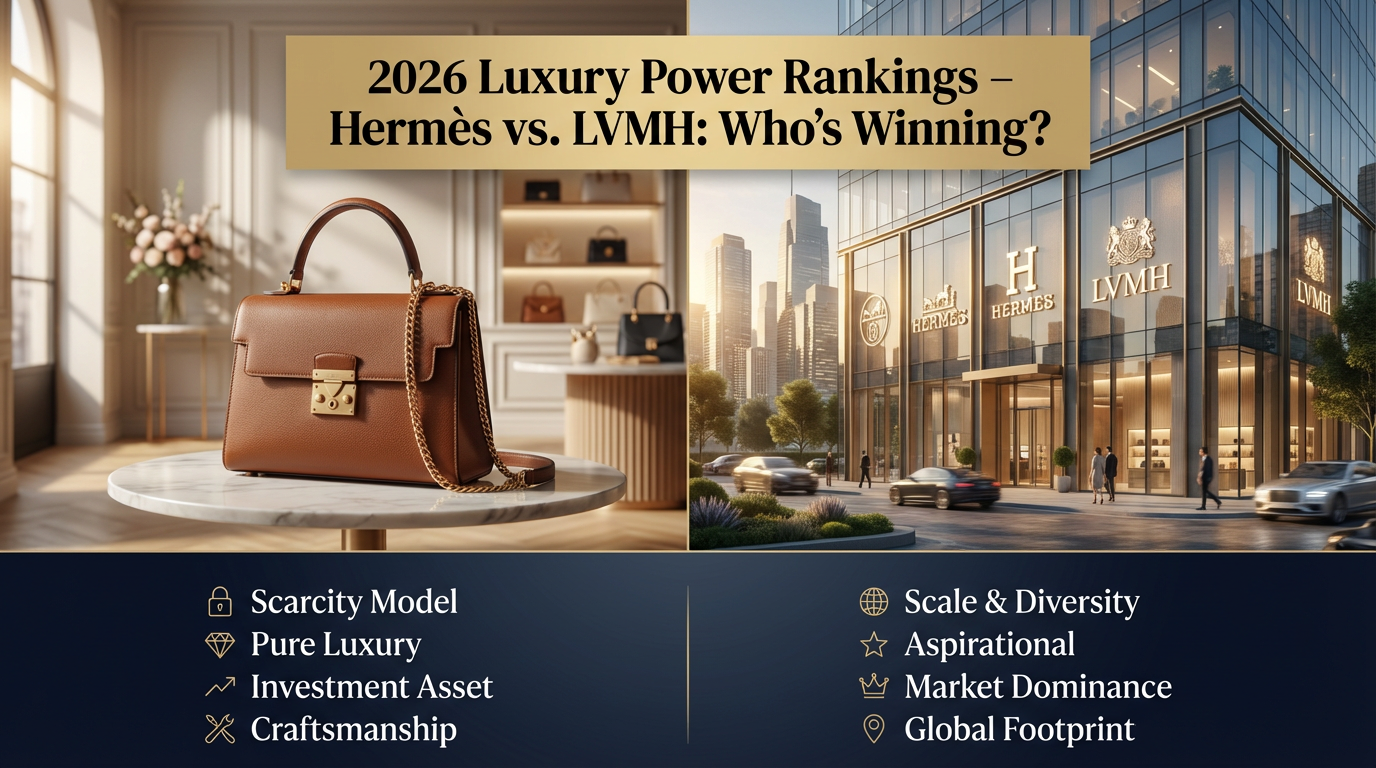
Today, we analyze the current state of the titans LVMH and Hermès and the three pillars keeping them at the top of the global food chain.
1. The Great Dethroning: Hermès vs. LVMH
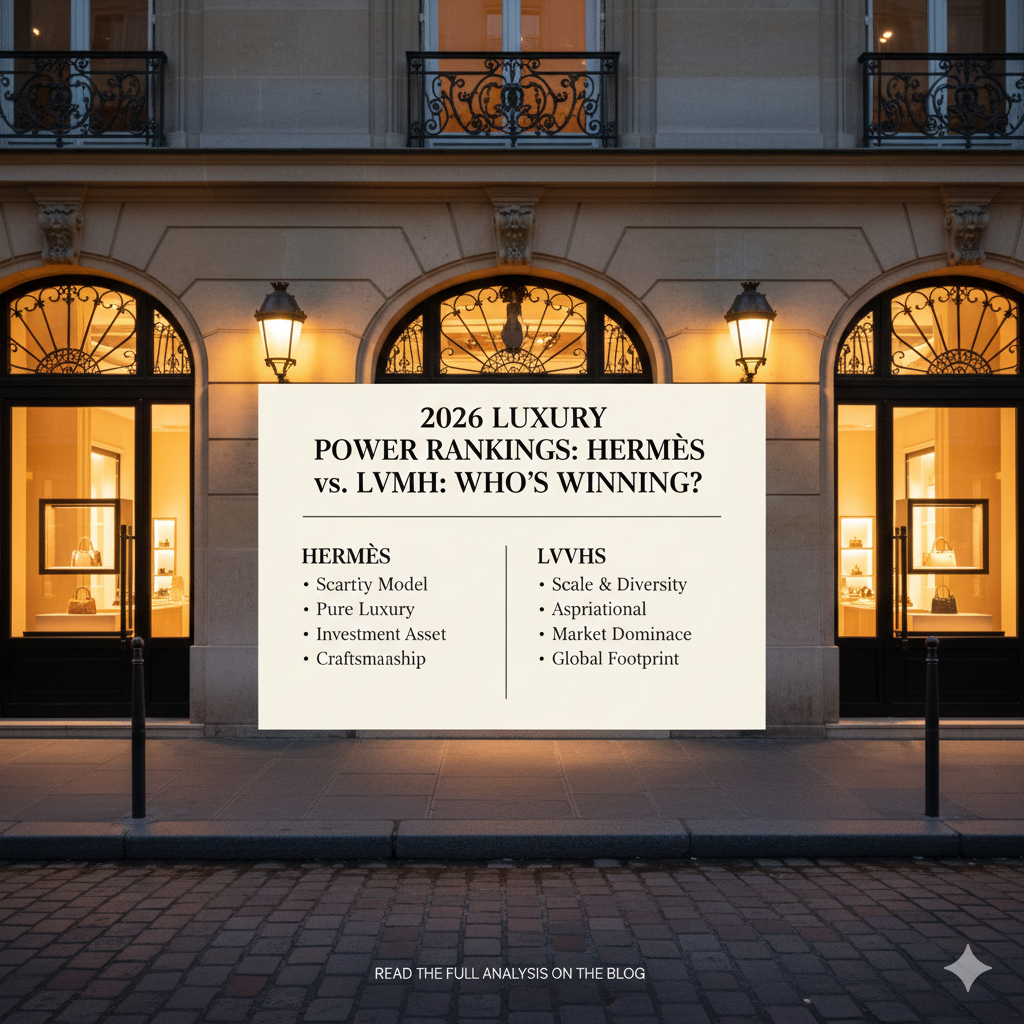
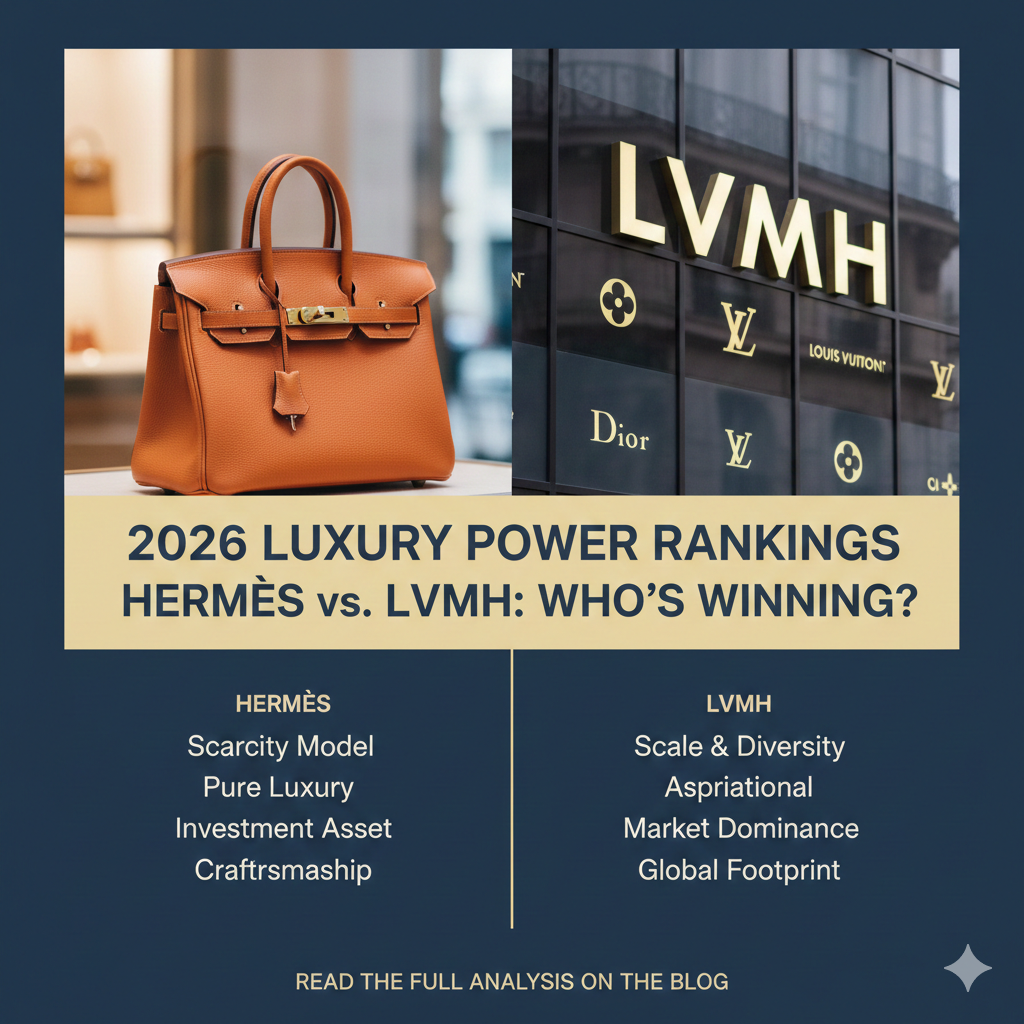
In early 2025, a headline sent shockwaves through the industry: Hermès surpassed LVMH as the world’s most valuable luxury brand by market capitalization.
While Bernard Arnault’s LVMH is a powerhouse of 75+ houses (Louis Vuitton, Dior, Tiffany & Co.), it faced headwinds due to its exposure to “aspirational” shoppers middle class consumers who pulled back during economic shifts.
Hermès, however, remains bulletproof. By focusing on:
- Vertical Integration: Controlling every step from the tannery to the boutique.
- Zero-Marketing for Icons: You won’t see a Birkin bag in a traditional digital ad.
- Extreme Scarcity: Production is capped, ensuring demand always triples supply.
Key Takeaway: In 2026, diversity (LVMH) is a strength, but purity (Hermès) is a superpower.
2. The Scarcity Model 2.0
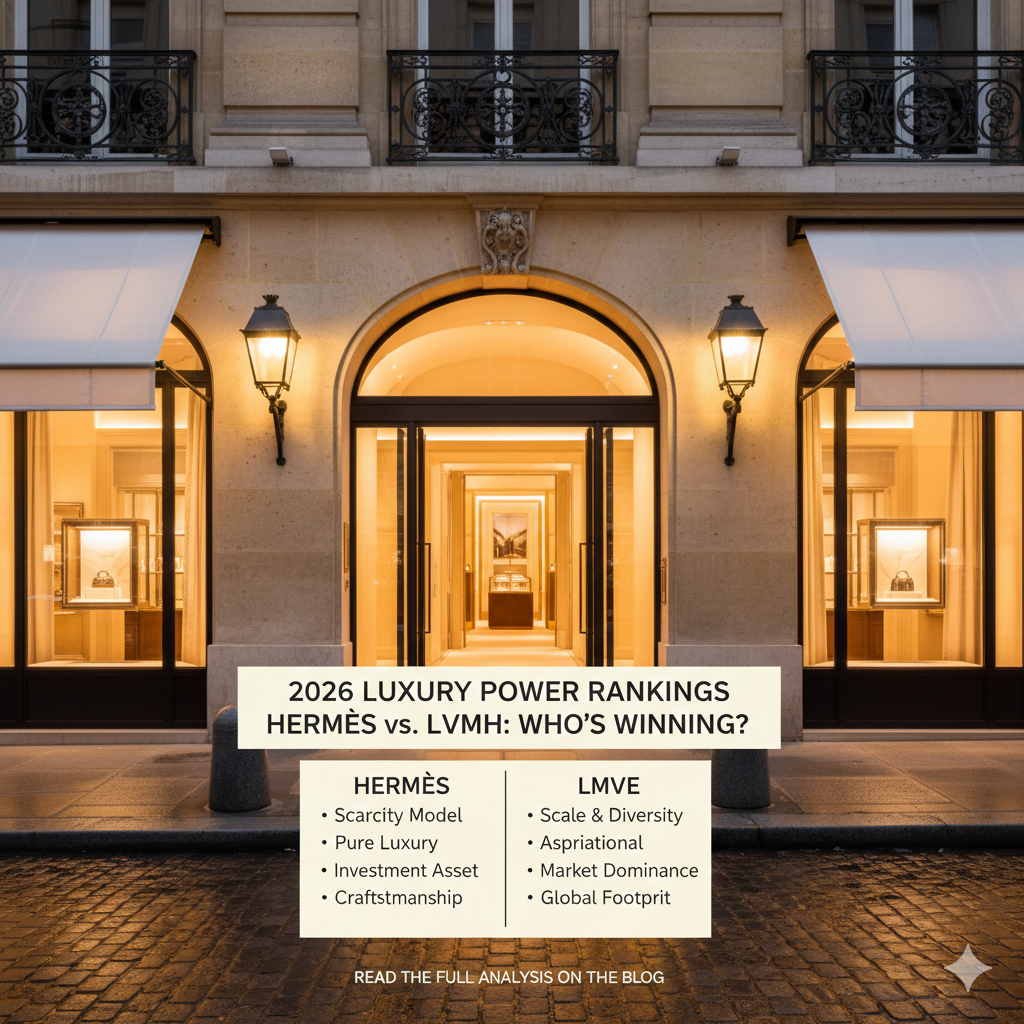
In 2026, scarcity is no longer just about limited stock; it’s about “Digital and Physical Gatekeeping.”
Luxury brands have moved away from the “anyone can buy if they have the money” model. To secure top-tier pieces from Richemont (Cartier) or Hermès, clients now navigate a complex ecosystem of:
- Historical Loyalty: Spending history is the new credit score.
- Private Salons: The most significant transactions now happen in non-indexed, invite-only physical spaces (like the new Chanel private boutiques).
- The “Waitlist” Renaissance: Long lead times are back, used as a tool to filter out “flippers” and retain true collectors.
3. Beyond “Quiet Luxury”: The Rise of Savoir-Faire
If 2024 was about “Old Money Aesthetic,” 2026 is about The Story of the Make.
International consumers are tired of high price tags on “Made in Italy” items that feel mass-produced. The “Untouchable” brands are those investing in Savoir-Faire artisanal workshops that the public can occasionally glimpse.
Brands like Brunello Cucinelli and Loro Piana continue to dominate because they sell “The Village” the idea that your $5,000 cashmere sweater supported a specific group of artisans in Solomeo.
The 2026 Luxury Checklist for Investors & Collectors
- Look for Resale Retention: Does the item hold at least 80% of its value on Vestiaire Collective or Sotheby’s?
- Avoid “Logo Fatigue”: High-growth brands are currently those with subtle, hardware-based branding rather than print.
- Prioritize Hard Luxury: Jewelry and watches (Cartier, Patek Philippe) are currently outperforming leather goods in market stability.
Final Thoughts
The luxury market isn’t shrinking; it’s distilling. The brands that will survive 2026 are those that treat their customers as members of a private club rather than just consumers.
What do you think? Is the Hermès model sustainable, or is LVMH’s massive scale the safer bet for the long term? Let me know in the comments.